
Resources for Improving Workflows With AI and Automation
Explore practical articles, checklists, and examples designed to help small-business owners identify repetitive work, choose useful tools, and build clearer systems.
The focus is not on chasing every new AI feature. It is on finding useful ways to improve follow-up, reporting, communication, documentation, and everyday administrative work.
Three Resources for Finding Your First Practical AI Workflow
These guides explain what a workflow audit is, how to identify useful opportunities, and how to choose tools without creating more complexity.
What Is an AI Workflow Audit?
Learn how a workflow audit reviews repetitive work, communication, handoffs, and administrative tasks to identify practical improvements.
- What an audit reviews
- Who it is useful for
- What recommendations may include
- How to prepare
AI Workflow Audit Checklist
Use this checklist to identify repeated tasks, unclear handoffs, communication delays, and processes that rely too heavily on memory.
- Repeated administrative work
- Lead and customer follow-up
- Reporting and documentation
- Team responsibilities
How to Choose AI Tools That Actually Help
Review a practical framework for comparing AI tools based on the workflow, required integrations, team adoption, cost, and business value.
- Start with the problem
- Review existing software
- Consider adoption and maintenance
- Avoid unnecessary subscriptions
Practical Guidance for Different Parts of the Workflow
Use these categories to focus on the business problem you are trying to solve rather than starting with a particular platform.
Follow-Up and Communication
Improve lead responses, estimate follow-up, customer updates, reminders, review requests, and recurring messages.
Explore examples →Reporting and Documentation
Turn notes, activity, meetings, inspections, and performance data into clearer reports and usable summaries.
Explore examples →Automation and Integrations
Learn how forms, email, spreadsheets, CRMs, and task systems can share information without repeated manual entry.
Review tools →Processes and Team Adoption
Build workflows that employees understand, owners can maintain, and managers can review consistently.
Review my approach →Latest Articles
Practical guidance for improving workflows, choosing useful tools, and implementing AI without unnecessary complexity.
-
AI Workflow Audit Checklist for Small Business Owners
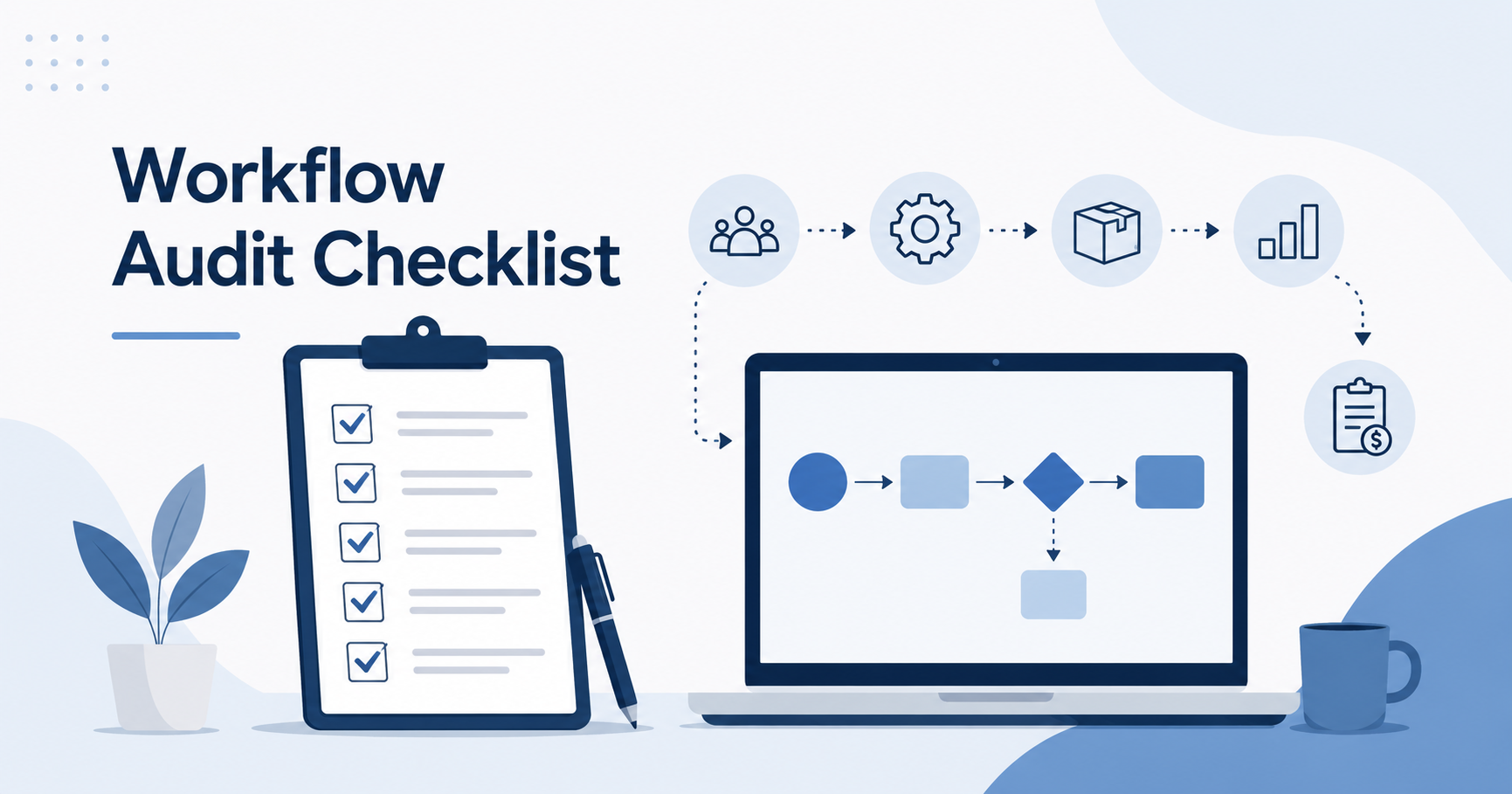
Practical AI for Small Business AI can be useful for small businesses, but only when it is tied to real work. The goal is not to automate everything. The goal is to identify the repetitive tasks, communication gaps, and manual handoffs that cost your team time every week. Use this checklist to find practical places…
-
What Is an AI Workflow Audit?
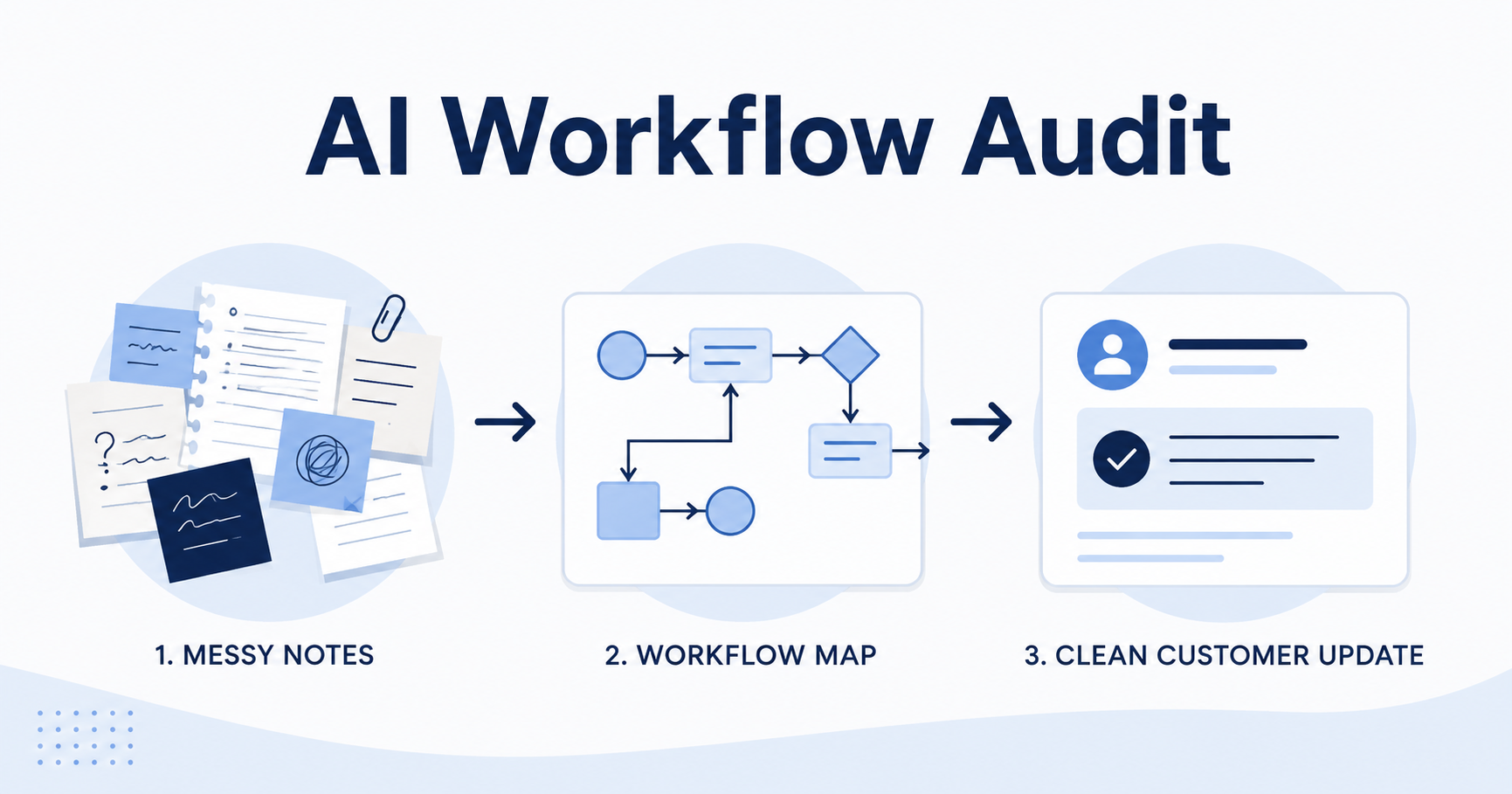
Practical AI for Small Business An AI Workflow Audit is a practical review of how work moves through your business, where time is being lost, and where AI or automation may create a useful improvement. The goal is not to recommend software for the sake of adding technology. The goal is to understand the current…
-
AI Tools for Small Businesses: How to Choose What Actually Helps

Practical AI for Small Business The best AI tool is not necessarily the most powerful, popular, or feature-heavy option. It is the tool that solves a real workflow problem, fits the way your team works, and remains useful after the initial excitement wears off. This guide provides a practical way to compare AI and automation…
Where Is Your Business Losing Time Today?
A useful workflow opportunity is often hiding inside work that feels normal because your team has repeated it for a long time.
Look for places where people copy information, rewrite similar messages, search for missing details, prepare the same report, or depend on someone remembering the next step.
Request a Workflow AssessmentA Useful Workflow Should Make the Work Easier to Perform
Successful AI implementation is not measured by how advanced the technology appears. It is measured by whether the process becomes clearer, faster, more consistent, and easier to maintain.
Clear Ownership
The team understands who starts the workflow, who reviews the result, and who is responsible for the next action.
Reliable Inputs
The workflow receives enough accurate information to produce a useful result without constant correction.
Appropriate Review
Important communication, commitments, and decisions retain the right level of human approval.
Documented Handoff
The people using the process know what it does, how to use it, and what to do when something changes.
Choose the Level of Help Your Business Needs
Use the free resources to begin identifying opportunities, then move into an audit or implementation project when you need a clearer plan or hands-on support.
Learn and Explore
Read the articles, review common use cases, and compare tools to better understand what may fit your business.
Explore use cases →Audit the Workflow
Review the current process, identify bottlenecks, and receive a prioritized list of practical improvements.
Review the Workflow Audit →Build the Solution
Implement templates, prompts, automations, documentation, and connected workflows through a focused project.
Review Implementation Sprints →Ready to Improve a Workflow in Your Business?
Share what is taking too much time, where the process is breaking down, and what you would like to improve. I will review it and recommend the most practical starting point.
Book a Free Workflow Assessment